How to Run a Betting Pool with Friends — Legally (2026 Guide)
The legal way to keep the sweat, the standings, and the trash talk — without the risk.
Every fall it's the same ritual: someone in the group chat says "we should do a pool this year," someone volunteers a spreadsheet, someone else collects $50 a head on a payment app, and nobody — not one person — asks whether any of this is legal.
Here's the uncomfortable answer: in most states, it probably isn't. And here's the useful answer: there's a way to keep everything that makes a pool great — the sweat, the standings, the trash talk, the season-long grudges — and drop the one part that causes all the problems.
The uncomfortable truth about real-money pools
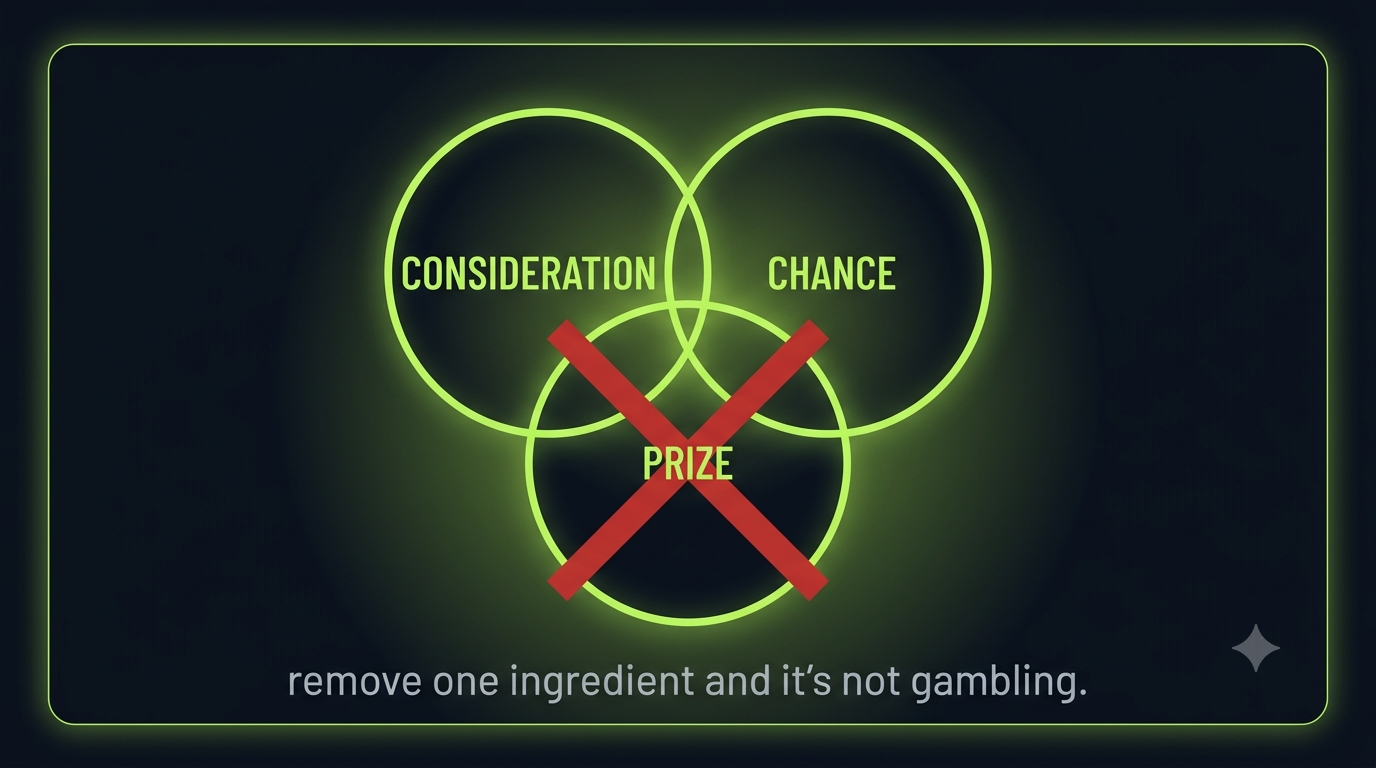
Gambling law in most US states comes down to three ingredients: consideration (you paid to play), chance (the outcome isn't fully in your control), and a prize (winners get something of value). Put all three together and you have gambling — and unless a licensed operator is running it, it's generally illegal gambling, even among friends, even for small stakes, even if nobody takes a cut.
A few realities that surprise people:
- The office pool is technically illegal in most states. Enforcement against a $10 squares board is essentially nonexistent — prosecutors have better things to do — but "rarely enforced" and "legal" are different things, and HR departments know the difference too.
- Some states have "social gambling" exceptions, most don't. A minority of states carve out truly social games — typically requiring a genuine social relationship, no house profit, and sometimes stake limits. The majority have no such carve-out. If your league spans state lines (whose doesn't, in a group chat?), you're navigating several rulebooks at once.
- Legal sportsbooks didn't fix this. Even in 2026, with regulated sports betting live in most of the country, some of the biggest states still have no legal online sportsbook — and regardless, a licensed book can't run your private, season-long pool with your friends. That was never their product.
- Payment apps are paying attention. Venmo, Zelle, and Cash App terms prohibit using personal accounts for gambling activity. Accounts do get frozen, usually at the least convenient moment — like the week the pot pays out.
- The fantasy carve-out doesn't cover you. Federal law's fantasy-sports exemption is built for contests decided by the accumulated stats of athletes across multiple games — not for pools that ride on game outcomes and point spreads. A spread pool is exactly what the exemption doesn't protect.
None of this means your uncle's football pool is getting raided. It means the whole thing runs on "probably nobody will care" — and if you're the commissioner collecting the money, you're the one holding that risk, along with the IOUs, the payment chasing, and the awkward conversation when Dave doesn't pay in until Week 9.
What actually makes a pool legal
Remember the three ingredients. Remove any one of them and, in general, you're no longer inside the gambling statutes:
- Remove chance? Not happening — it's sports.
- Remove consideration? That's the "free to enter" sweepstakes model. It works for one-off promos, but a season-long pool where nobody has anything in the game tends to die by October.
- Remove the prize? This is the one that works — if you replace the money with something that still keeps everyone caring for eighteen weeks.
That "something" turns out to have existed all along: a bankroll, a ledger, and a leaderboard. Poker night figured this out decades ago with chips. The season-long version is the virtual-bankroll betting league.
The virtual-bankroll league: all the sweat, none of the risk
Here's the format, and why it's quietly replacing the cash pool for a lot of long-running groups:
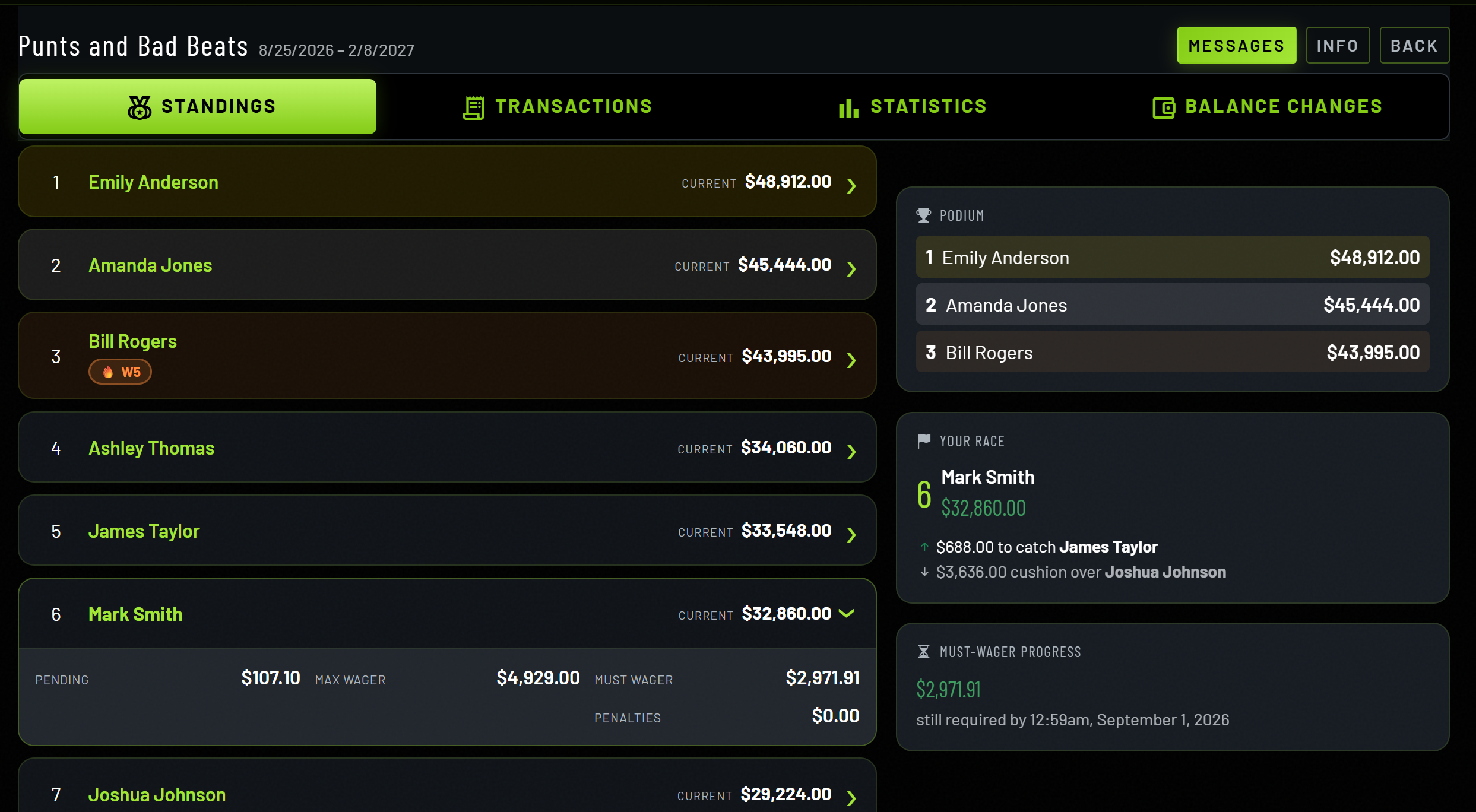
Every member starts the season with an identical virtual bankroll — say, 1,000 units. Real games, real point spreads and totals from a live odds feed, real sportsbook mechanics: spreads, moneylines, over/unders, parlays, teasers, even props if your league allows them. Bets grade automatically when games go final. The standings rank everyone by what they've built their bankroll into — and the standings, it turns out, were always the point.
No money in. No money out. No payment apps, no IOUs, no state-by-state rulebook, nothing your employer or your spouse could raise an eyebrow at. It's legal in all 50 states for the same reason Monopoly is.
"Our league has been going for years, but the logistical headaches of tracking everything manually were taking the fun out of it. Switching to a virtual bankroll format kept the exact same weekly competitive energy, but without any of the administrative clutter. It turns out people care way more about climbing the leaderboard and holding onto bragging rights than a cash pot anyway."
— Terry, commissioner of an 8-member league, 11th season
What's genuinely different from the spreadsheet era — and this is the part commissioners feel immediately — is that nobody has to run it. The lines update themselves, the grading happens overnight, the ledger can't be argued with, and the commissioner goes back to being a player instead of an accountant.
The honest section: what you give up
Nobody wins cash. That's the trade, stated plainly.
Here's what a decade of running leagues teaches, though: in a $50 pool, the money was never really the product. Divide most pots by eighteen weeks of sweat and you're playing for beer money — what people actually show up for is the standings, the group chat after a backdoor cover, and twelve months of being the guy who won. Bragging rights survive the format change completely intact. Some leagues add a trophy that lives on the winner's mantel; the engraving costs more than most pool payouts ever did.
If your group truly, specifically plays for the cash — this format isn't that, and we'd rather say so than pretend otherwise.
How to set one up in an afternoon
- Create the league. One person (the commissioner) sets it up: league name, starting bankroll, season schedule. On TheWagerLeagues.com that's about ten minutes of choices, and the commissioner's league fee is the only cost — members always join free.
- Set the house rules. Maximum bet size (so nobody YOLOs the bankroll in Week 1), a minimum weekly wager if you want to force action (highly recommended — see the FAQ), which bet types are allowed, whether busted bankrolls get a rebuy.
- Invite the crew. Email invites or a six-character join code dropped straight into the group chat.
- Launch before kickoff. Lines are live all season; Week 1 is the natural start, but start mid-season if you like. Add a confidence-pool side contest for the members who want something lighter alongside.
There's a simple guarantee: if it's not working for your crew by Week 2, email us and we'll refund the league fee in full.
FAQ
Is a betting pool with friends illegal?
If real money goes in and real money comes out, it's technically illegal gambling in most US states, even among friends — a minority of states have narrow social-gambling exceptions. Enforcement against small private pools is rare, but the legal status is what it is. (Not legal advice; rules vary by state.)
Can the winner get a real prize?
The moment members' money funds a payout, you've rebuilt a gambling pool with extra steps. Keep prizes symbolic (a trophy, the belt, a year of bragging rights) and keep entry free for members.
What about our office pool?
Same analysis, plus workplace policy on top. A virtual-bankroll league is the version you can run openly on the company Slack.
Do league members pay anything?
No. On TheWagerLeagues.com, the commissioner pays a per-season league fee; members join free.
Does fake money actually stay fun?
Eighteen weeks is a long time to protect a first-place bankroll from fourteen people trying to take it from you. The sweat, it turns out, was never about the fifty bucks.
Give your league a second season this season.
Commissioners create the league; members join free. Not a hit by Week 2? Full refund.
Start your league